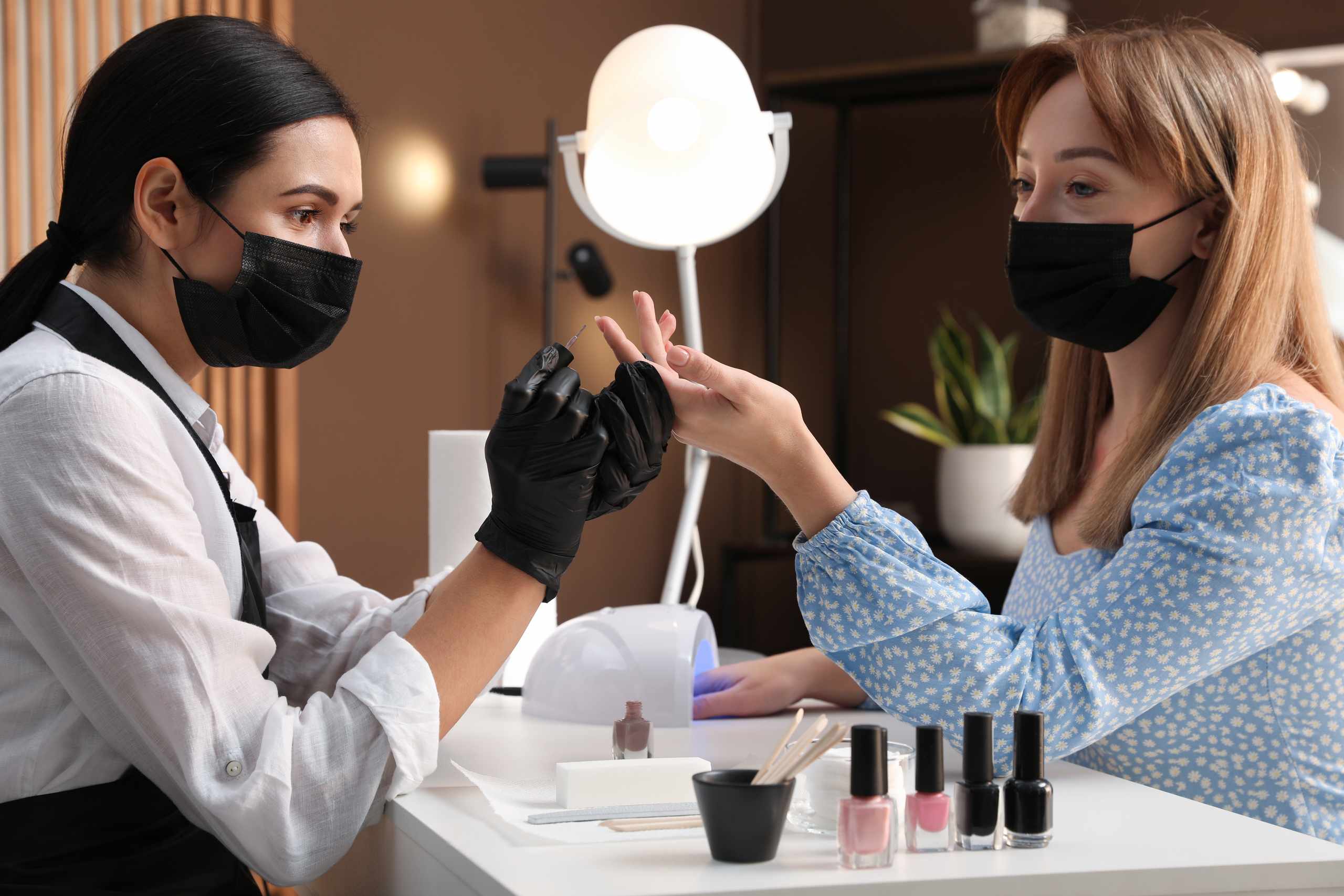
It can be gratifying to slather on a single overcoat because the color will appear in one go. But that is where things start to go wrong for the manicure. The surface might appear domed, the product might pool along the cuticle line, and the free edge will feel heavier when the top coat is added. By contrast, applying several thin layers does require additional patience, but it gives you a higher degree of control over the nail shape, the glossiness of the surface, and the width of the cuticle gap, especially in relation to the sidewall area.
The biggest problem with applying a single overcoat is that it is impossible for the brush to pick up only enough polish to coat the nail in one pass; as a result, the product will spread out wider than you would like, and it will pool along the base of the nail. There is a good chance it will seep into the proximal nail fold before you are able to wipe the excess away. With gel polish, a very bulky overcoat might appear uneven after being cured. A regular (air-dry) polish may dry slowly or show marks after you have applied such a thick coat.
Before you paint your nail, take the brush out of the bottle and wipe the excess product off one side. Then place the brush a little distance away from the cuticle line and use very little pressure to fan out the bristles and move the brush in a stroke toward the free edge, leaving the product only where you want it, and the base of the nail relatively clear and dry. Your brush is going to glide across the nail plate rather than drag; if it feels as though you are pushing a puddle across your nail, then you have too much product on your brush.
For an easy way to learn just how much polish to pick up on your brush, try painting three practice tips, with one of the three coated with the thinnest coat possible, one coated with an extra-large layer, and one coated with the ideal quantity. Observe the three nails to see where the excess amount has flooded up into the wall areas, where the sparse layer has resulted in a streaky look, and how you would like the ideal nail to look like. Comparing a practice set of three nails under a desk lamp will teach you much more about proper control than trying to figure it out on a single working nail.
A bonus of thin layers is that it will be easier to clean up any errant marks. Even a very small amount of stray polish can easily be removed with a fine cleanup brush before it dries or cures. With a single, super-thick coat, you will find it much harder to clean up as it is constantly moving around while you work with it. It has a tendency to pull away from the center of the nail, smear in the vicinity of the proximal nail fold, or leave ridges after you remove stray polish. A very thin coat will keep all these things to a bare minimum. It is much easier to see exactly where the edge of your manicure is and you will keep a clear idea of your nail’s shape.
Never base a polish’s color depth on the first, thin coat alone. Many polishes look best with a second application of an equally thin coat followed by a top coat. The first coat sets your nail in place, the second fills in the coverage, and the final layer adds a beautiful finish that locks in your free edge. If you follow this process, your manicure will appear much cleaner and sharper than if you try to apply one color in one stroke, when there is no way the product could spread out perfectly as it dries on its own.
A sign you are using the right amount of color is when you are still able to see your original nail shape once it has been painted. Your sidewalls are not flooded with polish, your cuticle line is not crowded by any extra color or gloss, and your free edge remains very clear, rather than being bumpy or heavy to the touch. While doing nail practice, pay less attention to the speed with which your nail turns a solid color as you paint on each coat, and focus more on how calmly the color stays in the area where you originally painted it.